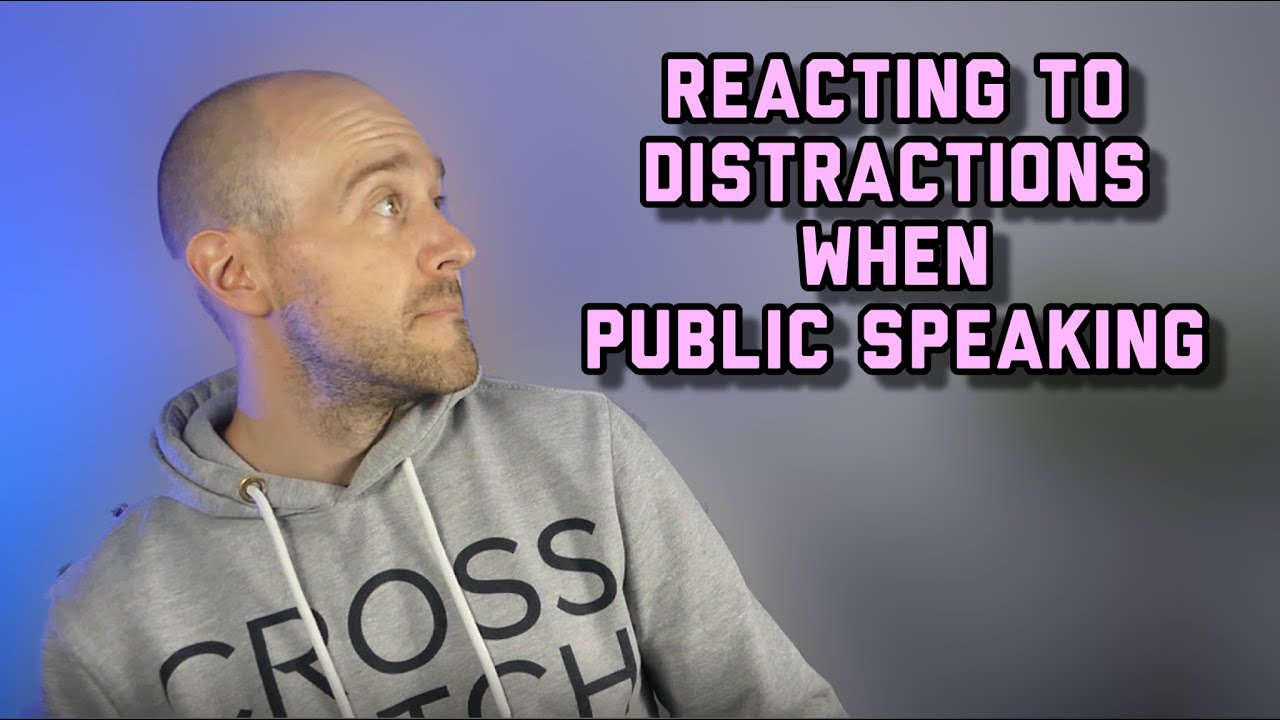
How to Handle Distractions Like a Pro When Public Speaking
Picture this: you're in the middle of delivering a speech, hitting your stride, and the audience is locked in — when suddenly, something unavoidable happens. A glass shatters. A door slams. Someone trips over a chair. Every head in the room swivels away from you and toward the commotion. Now it's on you to pick up the pieces and keep going. It's one of the most dreaded scenarios a speaker can face, but with the right approach, you can handle it with grace — and maybe even turn it to your advantage.
A Hard Lesson Learned Early On
Early in my public speaking journey, shortly after joining a Toastmasters club, I experienced this exact nightmare firsthand. I was delivering one of my very first speeches when a massive distraction captured the attention of nearly everyone in the room. I froze. I got completely derailed and couldn't reel the speech back in. It felt like a total disaster.
But that painful moment led to one of the best pieces of advice I've ever received. A fellow Toastmaster pulled me aside and said something simple yet powerful: "When a distraction happens, you have two options — you can ignore it, or you can acknowledge it."
Both strategies are valuable, and the key lies in knowing which one to use based on the situation at hand.
Option One: Ignore the Distraction
Ignoring a distraction is usually the right move when the disruption is relatively minor. Think of situations like:
- Someone walking in late and letting the door slam behind them
- A phone buzzing or briefly ringing in the audience
- Someone accidentally dropping an object
In these cases, you don't want to draw unnecessary attention to the person or the incident. Instead, you act as if nothing happened and keep delivering your speech with confidence. If the distraction has caused a ripple of chatter in the audience, you compensate by raising your voice, using vocal variety, and recapturing attention through energy and presence. A well-timed clap, a bold gesture, or a dramatic shift in tone — if it fits naturally within your story — can pull the audience's focus right back to you.
The beautiful thing about this approach is that when you continue speaking with unwavering confidence, the audience quickly forgets the distraction ever happened. Your composure sends a powerful signal: nothing is going to knock this speaker off course.
Option Two: Acknowledge the Distraction
Sometimes, however, the distraction is simply too significant to ignore. Maybe a waiter drops an entire tray of food. Maybe someone trips and falls on their way to a seat. Maybe a fire alarm briefly goes off. When the disruption is so dramatic that pretending it didn't happen would feel awkward or tone-deaf, acknowledgment is the stronger choice.
The best speakers I've seen handle these moments do something remarkable: they find a way to tie the distraction back into their speech. They use what just happened to reinforce their message, add a touch of humour, or create a spontaneous moment of connection with the audience.
A few important ground rules for acknowledging distractions:
- Never throw anyone under the bus. Avoid being mean-spirited or making fun of the person involved.
- Keep it light and move on quickly. A brief, good-natured comment is far more effective than dwelling on the incident.
- Connect it to your message if possible. This takes creativity, but when pulled off, it's incredibly impressive.
This ability to pivot on a dime and weave an unexpected event into your speech is an elite-level public speaking skill. Audiences genuinely appreciate it because it demonstrates quick thinking, confidence, and complete command of the room.
Choosing the Right Strategy
So how do you decide which option to use in the moment? It comes down to the scale of the disruption. Minor distractions — ignore them and power through. Major, impossible-to-miss disruptions — acknowledge them with grace and creativity.
If you're still building your confidence as a speaker, there's no shame in defaulting to the "ignore it" strategy. Staying composed, maintaining your energy, and delivering your speech with conviction will carry you through virtually any distraction. As you grow more experienced, you can begin experimenting with acknowledgment, learning to turn unexpected moments into some of the most memorable parts of your presentation.
The Surprising Upside of Distractions
Here's something counterintuitive: when you successfully acknowledge a major distraction — tying it into your message with wit and poise — you can actually deliver a more impactful speech than if the distraction had never occurred. Those unscripted, spontaneous moments create genuine connection and make you unforgettable as a speaker.
Distractions are inevitable. They will happen to every speaker at some point. But they don't have to be disasters. The next time something unexpected interrupts your speech, remember your two options: ignore it or acknowledge it. Choose wisely, commit fully, and you'll walk away from the podium knowing you handled it like a true professional.