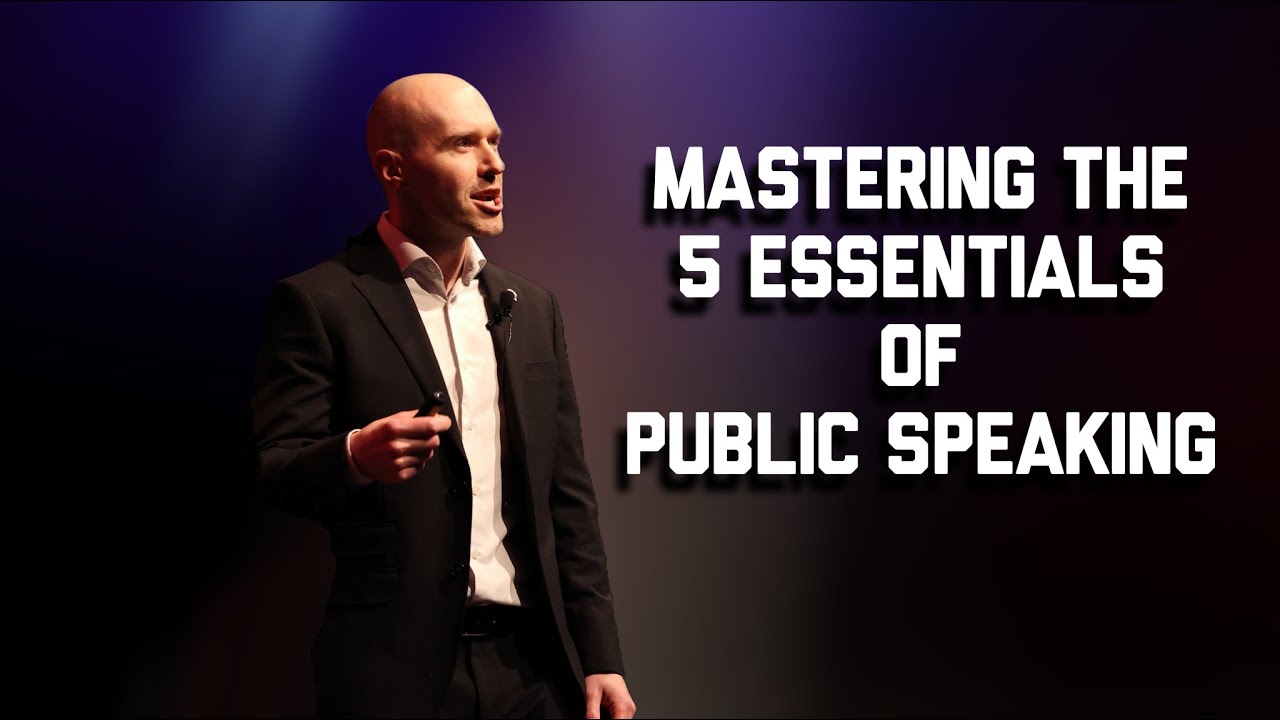
Mastering the 5 Essentials of Public Speaking: How to Go from Average to Exceptional
People are more scared of public speaking than they are of dying. Let that sink in for a moment. While that statistic has been quoted countless times, it doesn't have to be your reality. After a decade of honing public speaking skills and studying what separates average speakers from truly exceptional ones, communication coach Wade Patterson has distilled everything he's learned into five essential elements — and they have the power to transform anyone into a polished, professional public speaker.
Why These Five Elements Matter
Public speaking isn't some mysterious gift that only a lucky few are born with. It's a craft — one that can be broken down, studied, practiced, and mastered. Through years of observation and personal development, a clear pattern emerges: the speakers who captivate audiences aren't doing a hundred things differently. They're doing five things exceptionally well. When you dial in these five elements and commit to perfecting them, you'll stand head and shoulders above the rest.
The Five Essentials of Professional Public Speaking
So what are these game-changing elements? Here's what separates the amateurs from the professionals:
- Building a Kick-Ass Speech: Everything starts with structure. A well-crafted speech is the foundation upon which all other skills are built. Without a strong message and clear organization, even the most charismatic delivery falls flat.
- Eliminating Filler Words: Nothing undermines a speaker's credibility faster than a constant stream of "ums," "uhs," and "you knows." Learning to eliminate these verbal crutches instantly makes you sound more confident and authoritative.
- Leveraging Body Language: Communication isn't just about what you say — it's about what your body says while you're saying it. Mastering body language allows you to reinforce your message and command the room without uttering a single word.
- Using Vocal Variety Like a Professional: Monotone delivery is the fastest way to lose an audience. The best speakers use pace, pitch, volume, and strategic pauses to keep listeners engaged and emotionally invested from start to finish.
- Sprinkling in Humor: Humor is one of the most powerful tools in a speaker's arsenal. It builds rapport, eases tension, and makes your message memorable. You don't need to be a comedian — you just need to know how and when to use it.
Learning from the Best: Conversations with World-Class Performers
Beyond the core five elements, there's incredible value in learning directly from people who perform at the highest level. That's why the course includes in-depth conversations with two phenomenal guests.
The first is Harry Mack, widely regarded as the world's greatest freestyle rapper. His insights on the importance of practice and how he manages nerves before performing are deeply relevant to anyone who steps in front of an audience. If someone who improvises complex lyrics in real time can speak candidly about preparation and anxiety, there's a lesson in there for all of us.
The second guest is Sean Kanungo, one of the greatest keynote speakers in Canada and beyond. Forbes actually named him the best virtual speaker in the world — a distinction that speaks volumes about his ability to connect with audiences in any format. His firsthand tips on what makes a speaker truly exceptional are invaluable.
The Path to Becoming a Better Speaker
Here's the truth about public speaking improvement: awareness is the first step. Simply knowing what the five essentials are puts you ahead of most people. But real transformation comes from taking the time to digest the information, practice it deliberately, and then put it into action through your speeches. It's a process — and it's one that pays dividends in every area of your life, from boardrooms to wedding toasts to everyday conversations.
Free resources are a wonderful starting point, and they should always be part of your learning toolkit. But when you're ready to get serious — when you want to move beyond casual improvement and pursue professional-level communication skills — a structured, comprehensive approach makes all the difference.
Conclusion
Public speaking absolutely should not be scarier than dying. With the right framework, the right practice, and the right mindset, anyone can become a confident, compelling speaker. The five essentials — crafting a powerful speech, eliminating filler words, mastering body language, harnessing vocal variety, and using humor strategically — are your roadmap. Whether you learn them through free content or invest in a deeper, more structured course, the important thing is that you start. Your next audience is waiting, and they deserve to hear you at your best.