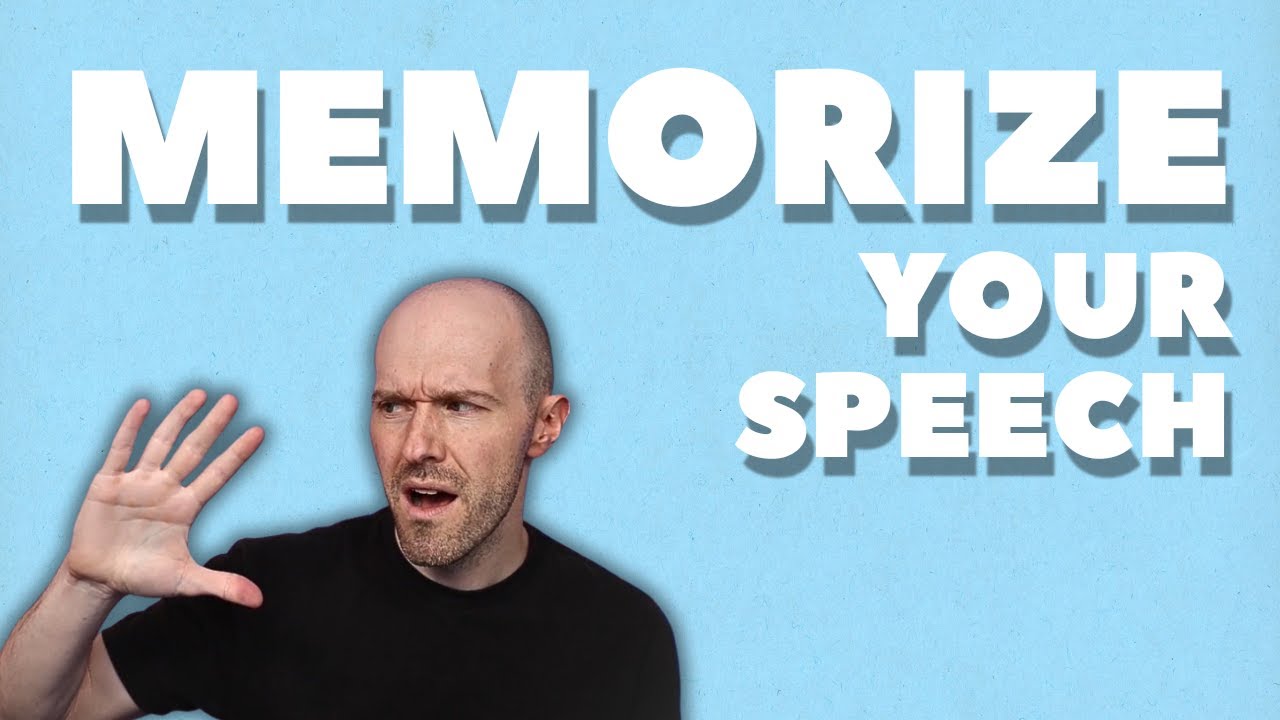
The "Handy" Method: How to Memorize a Speech Using Just Your Fingers
What if you could memorize an entire speech without a single note card — using nothing more than the hand you already bring with you to every presentation? It sounds almost too simple, but this finger-based memorization technique is a game-changer for anyone who wants to speak confidently without relying on notes. Here's how it works and why it's so effective.
Why Traditional Memorization Falls Short
Most of us were taught in school to memorize things in a linear, chronological fashion — step one, step two, step three. But that's not actually how our brains work best. Research consistently shows that our minds are far more powerful at retaining information when we associate visuals or images with concepts. The more vivid and memorable the image, the stickier the information becomes.
This insight is the foundation of a brilliant technique originally shared by author Mike Mallowitz over a decade ago. The idea is elegantly simple: use each finger on your hand to represent a key section of your speech, anchored by a strong visual association. Your hand is always with you on stage, and a quick glance at your fingers can instantly trigger your memory.
How the Finger Method Works
Before diving in, it's important to note that this method works best when you've built your speech around bullet points and key ideas — not a word-for-word script. You're memorizing the structure and major talking points, then speaking naturally around them. Each finger becomes a mental anchor for one chunk of your presentation.
Here's the process:
- Assign each finger a section of your speech, from thumb to pinky.
- Create a vivid visual that connects the finger to the topic.
- Practice recalling the visuals by looking at each finger in order.
The key is making each visual association as memorable, quirky, or even absurd as possible. The stranger the image, the easier it is to recall.
A Real Example: Five Fingers, Five Speech Sections
To prove how well this works, let's walk through a real speech — a presentation called Elevate Your Digital Presence — and assign each section to a finger. See if you can memorize all five points by the end.
Thumb — MSN Messenger: The speech opens with a funny story about an MSN Messenger conversation. The visual? Think of the universally recognized thumbs-up emoji — the kind people send as an entire response to a text message. Thumb equals thumbs-up equals MSN Messenger. Easy.
Index Finger — Passport Photo Story: The second section covers an embarrassing passport photo experience. Picture your index finger pressing a camera's shutter button — that satisfying click of taking a photo. Index finger equals camera equals the passport story.
Middle Finger — The Power of Interviewing: The third section discusses interviewing others to create great content and build authority. Imagine the middle finger — the longest one — as a tall microphone, complete with a wind cover on top. Middle finger equals microphone equals interviewing.
Ring Finger — Artificial Intelligence: The fourth section explores AI as a productivity tool. The visual here is delightfully weird: think of a slightly crooked or wonky finger — like the deformed hands that early AI image generators like MidJourney used to produce. That unsettling, not-quite-right look instantly triggers the association with artificial intelligence.
Pinky — Full Circle Ending: Every great speech comes full circle, ending where it began. When you see your pinky, think of curling it into a small circle. Pinky equals circle equals bringing the speech's opening story or question back for a powerful close.
Why This Technique Is So Powerful
If you followed along, you just memorized the entire structure of someone else's speech in a matter of minutes. That's the magic of visual association. Here's why it works so well for public speaking:
- It's portable. Your hand goes everywhere you go — no note cards to fumble with or forget.
- It's discreet. A quick glance at your hand mid-presentation looks completely natural.
- It leverages how memory actually works. Vivid images tied to physical anchors are far easier to recall than a list of abstract bullet points.
- It encourages natural delivery. Because you're remembering concepts rather than scripted sentences, you speak more conversationally and authentically.
Tips for Making It Work
To get the most out of this method, keep a few things in mind:
- Limit yourself to five key sections. You have five fingers — use that constraint to keep your speech focused and well-organized.
- Make your visuals weird or funny. The more unusual the image, the more firmly it sticks in your memory. A deformed AI hand is unforgettable for a reason.
- Don't write your speech word for word. This technique supports a bullet-point approach. Know your key ideas deeply, then let the exact words flow naturally each time you deliver them.
- Practice with your hand. Run through the speech while looking at each finger in sequence. After a few repetitions, the associations will feel automatic.
Conclusion
Memorizing a speech doesn't have to mean hours of rote repetition or sneaking glances at hidden notes. By assigning each section of your talk to a finger — anchored by a vivid, memorable image — you create a portable, intuitive system that works with your brain instead of against it. The best speakers don't read from scripts; they speak from understanding. And sometimes, all the understanding you need is right in the palm of your hand. Give this method a try for your next presentation, and you might be surprised at just how naturally the words come.