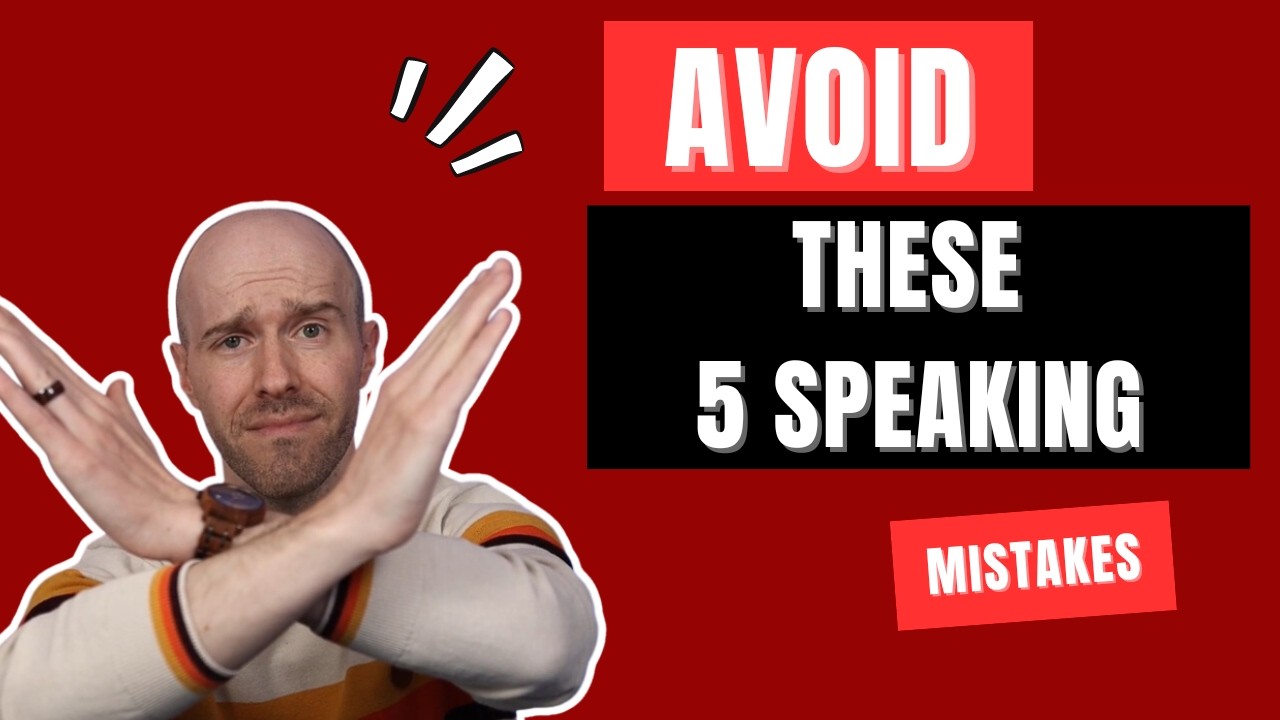
5 Common Speaking Mistakes That Undermine Your Impact — And How to Fix Them
Whether you're delivering a keynote, chatting with a colleague, or drafting an important email, the way you communicate shapes how others perceive you. The trouble is, most of us have picked up habits that quietly weaken our message — habits so common we barely notice them. Here are five speaking mistakes you should eliminate to become a more confident, compelling communicator in every setting.
1. Filling Every Silence with "Um," "Uh," and "Like"
Filler words are the most pervasive speaking mistake, especially in public speaking. Sounds and phrases like um, uh, er, like, so, and but creep into our speech because silence feels uncomfortable. For many speakers — particularly those just starting out — a pause can feel like an eternity, so they rush to fill it with noise.
Here's the truth: silence is far more powerful than filler. A well-placed pause gives your audience time to absorb what you've said, builds anticipation, and projects confidence. A string of "ums," on the other hand, is distracting and undermines your credibility.
The first step is identifying which filler words you default to. Here are a few ways to do that:
- Record yourself giving a speech or presentation, then watch it back and take note of every filler word.
- Use an app — tools like Orai or Speeko can analyze your speech and flag filler words automatically.
- Join a Toastmasters group, where an "ah counter" specifically tracks filler words used by each speaker during meetings.
Once you know your crutch words, you can consciously work to replace them with confident, purposeful pauses.
2. Watering Down Your Message with Qualifiers
This mistake shows up everywhere — in conversations, in meetings, in emails, and in text messages. Words like "just" and phrases like "this is just my opinion, but…" act as qualifiers that soften your statement before you've even made it. They signal to the listener that what you're about to say might not be worth hearing.
Consider the difference:
- "This is just my opinion, but I think we should spend some of the company funds to renovate the boardroom."
- "I think we need to use the company funds to renovate the boardroom."
The second version is direct, confident, and far more persuasive. The first version discounts your own idea before anyone else has the chance to evaluate it.
Pay attention to how often you sprinkle qualifiers into your emails and everyday speech. Phrases like "just a thought" or "I could be wrong, but…" may feel polite, but they erode your authority. Say what you mean, and say it with conviction. Let your opinion resonate on its own.
3. Winging Your Speeches
We've somehow romanticized the idea of stepping up to a podium and delivering a brilliant speech completely off the cuff — no notes, no rehearsal, pure spontaneity. And yes, there are rare individuals who can pull this off. But they are the exception, not the rule.
The vast majority of impactful speakers prepare thoroughly. They build out a clear structure. They rehearse multiple times. They visualize themselves delivering the presentation with confidence. And that preparation is precisely what makes them look effortless on stage.
If you have a presentation or speech coming up, resist the temptation to "just show up and see how it goes." Instead:
- Outline your key points and the structure of your talk.
- Practice delivering it out loud — not just reading it silently.
- Visualize the setting, the audience, and yourself performing well.
- Run through it multiple times until the flow feels natural.
Preparation doesn't make your speech robotic — it makes it stronger. You'll feel more confident, and your audience will feel the difference.
4. Writing Out Every Word and Reading Verbatim
If winging it is one extreme, scripting every single word is the other — and it's just as problematic. The instinct to write out an entire speech verbatim is understandable, especially for nervous speakers. It feels safe. But reading a full script robs you of nearly everything that makes a speech engaging.
Vocal variety disappears. When your eyes are glued to a page, your voice tends to flatten into a monotone. You lose the ability to speed up for excitement, slow down for emphasis, or pause for dramatic effect.
Body language suffers. Your hands are occupied, your eyes are locked downward, and your facial expressions become muted. You can't connect with an audience you aren't looking at.
Instead of scripting word for word, try building your speech in sections:
- Memorize your opening. Your first line or two should be committed to memory so you can deliver them with full eye contact and confidence.
- Use keyword notes. For each section of your talk, jot down a brief heading and a few trigger words that will remind you what to discuss. A quick glance is all you need to stay on track.
- Let visuals guide you. If you're using slides, use images — not walls of text — that represent each point. The visual becomes your prompt, and you speak to it naturally.
This approach gives you structure without a script. You'll sound more natural, more engaging, and far more authoritative than someone reading from a page.
5. Making It All About Yourself
This final mistake applies to every form of communication — formal speeches, casual conversations, and written messages alike. The most impactful communicators focus on their audience, not themselves.
In everyday conversations, this means genuinely listening. When someone shares something with you, resist the urge to immediately pivot to your own story. Instead, ask follow-up questions. Show curiosity. Let the conversational "ball" stay in their court for a while before hitting it back. We've all experienced the person who matches — or one-ups — every story we tell. Those conversations are exhausting, not enjoyable.
In public speaking, audience-centricity means tailoring your content to the people in the room:
- Speaking to business owners? Use examples grounded in their world — growth, operations, customer experience.
- Giving a wedding toast? Make it about the couple, their journey, and the shared joy of the guests — not your own highlight reel.
- Presenting to a team? Think about what they need to hear, not just what you want to say.
Personal stories absolutely have a place in speeches — they build relatability and trust. But the best speakers use personal stories in service of the audience's experience, not as an end in themselves. Always ask: Who am I speaking to, and what will resonate with them?
Speak with Intention, Connect with Impact
Great communication isn't about talent — it's about awareness and practice. By eliminating filler words, dropping unnecessary qualifiers, preparing thoroughly, using notes instead of scripts, and keeping your audience at the center of everything you say, you'll transform the way people experience your words. These aren't dramatic overhauls; they're small, deliberate shifts that compound over time. Start with the one that resonates most, work on it consistently, and watch your confidence — and your impact — grow.