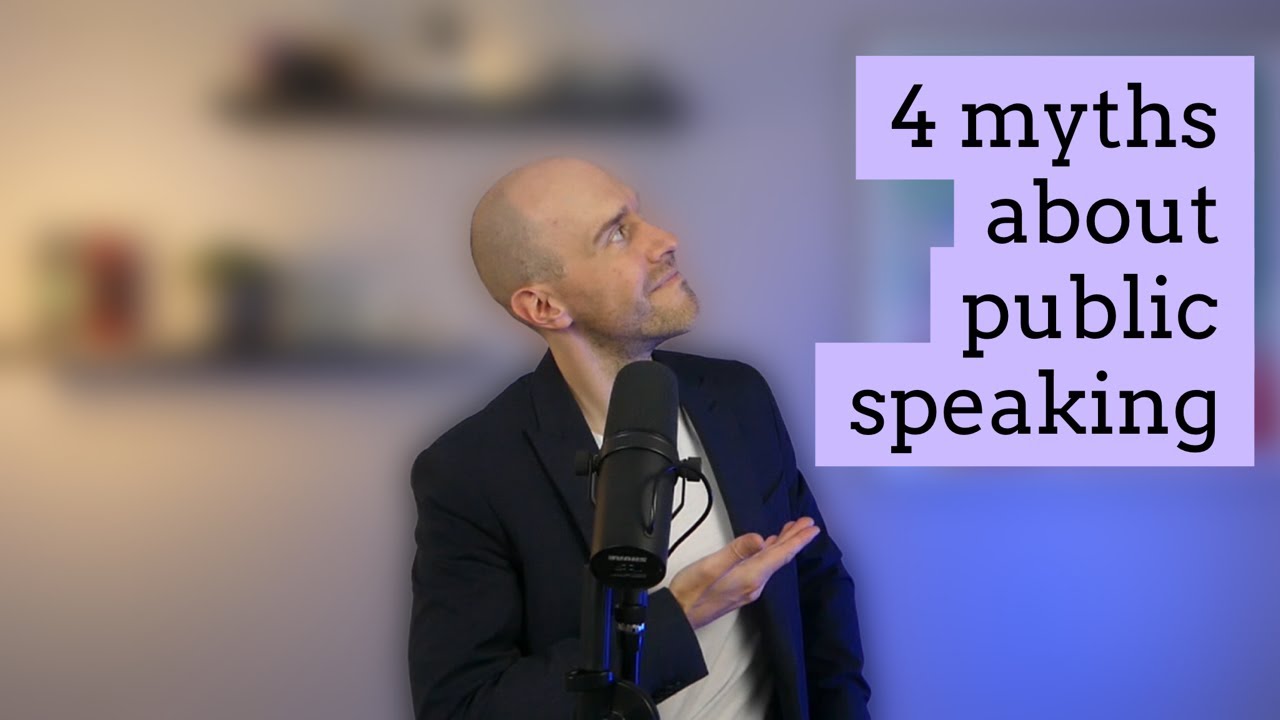
4 Public Speaking Myths That Are Holding You Back
Public speaking consistently ranks among the greatest fears people face. The idea of standing in front of a crowd, delivering a presentation while dozens of eyes stare back at you — or worse, stare down at their phones — is enough to make most people break into a cold sweat. If that sounds familiar, you're in good company. But here's the thing: much of what we've been told about public speaking is simply wrong. Let's debunk four persistent myths that may be standing between you and your best presentation.
Myth #1: Getting Nervous Means Something Is Wrong
One of the most common misconceptions about public speaking is that good speakers don't get nervous — or that if you get nervous, it's a bad sign. Nothing could be further from the truth.
Even experienced speakers who have addressed countless audiences still feel some level of nerves before stepping on stage. That anxious energy isn't a flaw; it's your body telling you that you care. It's a physical signal that you want to do well, that this moment matters to you. Your body is literally preparing itself for the task ahead.
So if you feel butterflies before a presentation, remember: there is nothing unique or abnormal about that experience. It's perfectly natural. The key is what you do with that energy. Don't let it cause you to freeze. Instead, embrace it and harness it. Channel those nerves into passion, enthusiasm, and focus. That's the difference between speakers who crumble under pressure and those who come alive on stage.
Myth #2: Great Speakers Can Just Wing It
We've all romanticized the idea of someone striding confidently to the podium with zero preparation and delivering an off-the-cuff masterpiece that moves the crowd to a standing ovation. It's a compelling fantasy — but it's almost never reality.
The truth is that the vast, vast majority of speeches could be dramatically improved with more practice. Even many of the best speakers who appear effortlessly natural put in enormous amounts of preparation behind the scenes. Their polished delivery isn't a gift; it's the result of deliberate, repeated rehearsal.
Public speaking is no different from any other skill. LeBron James didn't become one of basketball's greatest players by winging it — he put in the time. People who excel in their professions do so because they practice relentlessly. Speaking is the same.
No matter what level you're currently at, practice is the path forward. The more repetitions you go through, the more comfortable you become with your content, and the better your delivery will be. There are no shortcuts here.
Myth #3: Picture Your Audience in Their Underwear
This one has been floating around for decades — showing up in movies, TV shows, and well-meaning advice columns. The idea, presumably, is that imagining your audience in a vulnerable state will somehow make you feel less intimidated. But let's be honest: this advice is absurd.
Trying to mentally undress an entire room full of people while simultaneously delivering coherent, meaningful content is a recipe for disaster. It's wildly distracting. There is no way you can focus on your message, maintain eye contact, and engage your audience while running this bizarre mental exercise in the background.
If you've ever been told this is a great strategy, feel free to discard it immediately. Your mental energy before and during a speech is precious — spend it on connecting with your audience and delivering your message with conviction, not on a gimmick that does more harm than good.
Myth #4: You Should Write Your Speech Word for Word
This myth is perhaps the most widely believed — and the most damaging. Many people assume that the best way to prepare a speech is to write out every single word and then read it verbatim. In reality, this approach almost always leads to a flat, disengaging presentation.
Think about every speaker you've ever seen standing behind a lectern, reading directly from their notes. You could hear it in their voice — monotone and lifeless. You could see it in their body — stiff and disconnected. These are rarely the presentations that move us or stay with us.
Here's why this matters so much: the majority of communication doesn't come through words alone. It comes through body language and vocal tone. When you chain yourself to a script, you strip away two of the most powerful tools in your communication arsenal. You're left relying on words alone — and words, by themselves, simply aren't enough.
So How Should You Build a Speech?
If writing word-for-word scripts is off the table, what's the alternative? The answer lies in organizing your speech into general topic chunks rather than rigid sentences. Here's a practical framework:
- Know your introduction well. Your opening sets the tone, so rehearse it until it feels natural and confident.
- Outline your main points clearly. If you're delivering seven tips, know all seven and the order they come in. Use slides with short titles (five words or fewer) and a relevant image as visual cues.
- Memorize your conclusion. A strong close is just as important as a strong open.
- Let the middle breathe. Each time you practice, the way you articulate your main points might vary slightly — and that's perfectly fine. As long as you're conveying the core information, minor variations keep your delivery fresh and conversational.
Remember: your audience doesn't have a copy of your notes. They can't see what you planned to say. If you forget to mention a small detail, no one will know. But they will notice if you're reading from a page instead of connecting with them as a human being.
The Bottom Line
Public speaking doesn't have to be more terrifying than it already feels. By letting go of these four myths — that nerves are bad, that you can wing it, that imagining underwear helps, and that scripts are essential — you free yourself to focus on what actually makes a great speaker: genuine connection, thorough preparation, and confident delivery. Embrace the nerves, put in the practice, ditch the gimmicks, and learn to speak from understanding rather than from a page. Your audience will thank you for it.